Field dispatch
Female Holds the Cup While the Male Keeps Returning
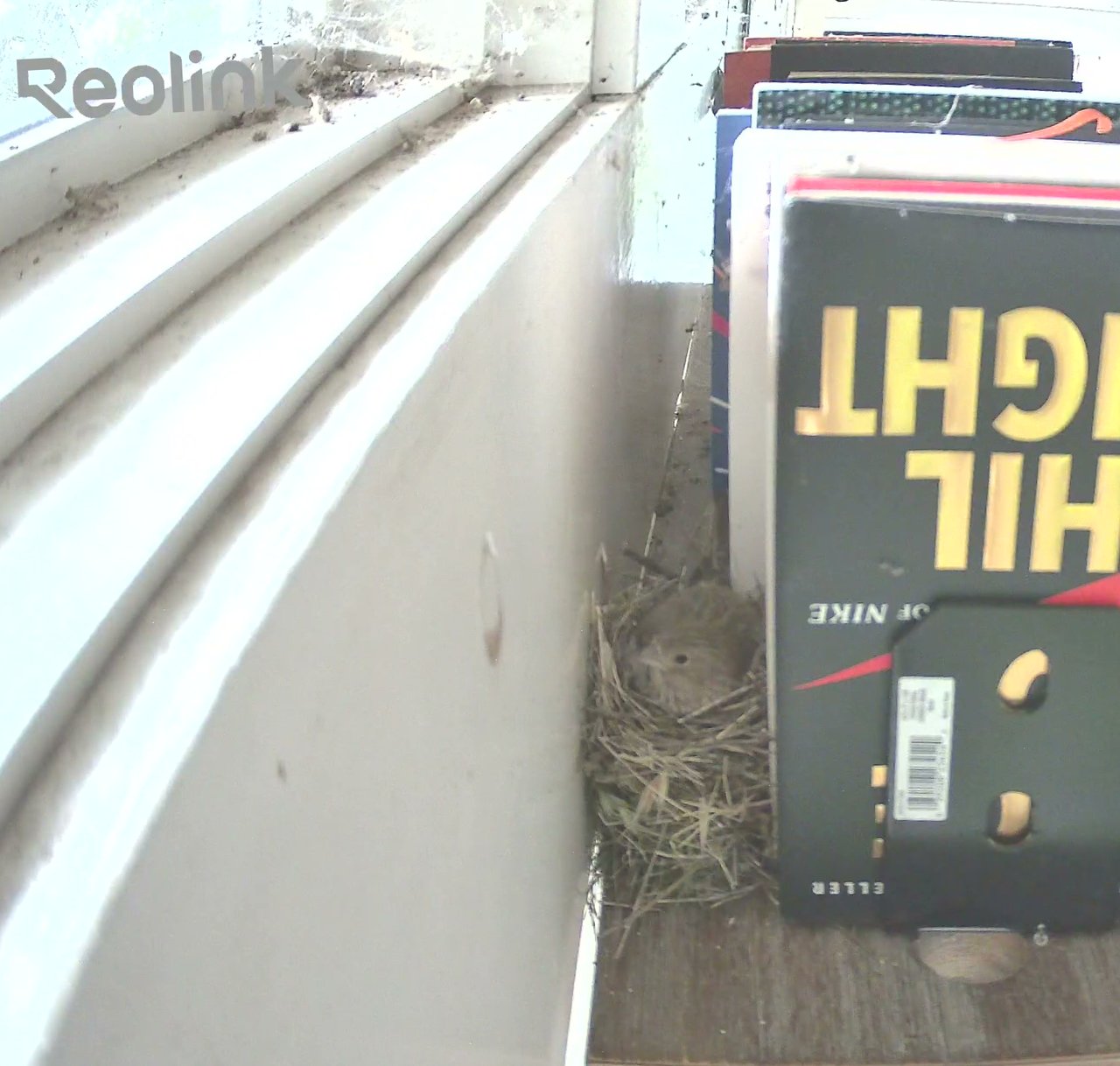
April 28–30, 2026 · Bookshelf nest, House Finch pair
The Pattern Before the Detail
Three days of data, collected across a camera transition, two observers (one biological, one electronic), and a male bird whose behavior invites scrutiny. The female is the constant: she is on the cup at dawn on all three mornings, off for brief foraging windows, back before the light fails. The male is the variable — increasingly present, increasingly close to the eggs, and on at least one afternoon raising questions about what “visits” actually mean for this pair.
The thread connecting all three days: the nest is rarely empty for long, and when it is, it is never empty for the reasons one might expect.
April 28 — The Handoff
The first day in this sequence is a day of transition. The old bookshelf camera, the primary eye on the cup, hands off to the Reolink sunroom unit around the 19:55 hour. Both cameras catch the same motion event within sixty seconds of each other — the cleanest possible confirmation of continuity.
What the bookshelf camera recorded through its final afternoon is a male House Finch arriving repeatedly: rim visits logged at 16:41, 17:33, 19:44, 21:00. The female settles into the cup at 18:32. By nightfall, the Reolink shows her in a low incubation posture, and a second motion event thirty-seven seconds later — almost certainly a brief nest-relief — compresses the biological shift-change into half a minute.
A human is also present at 22:24, adjusting the camera hardware. In the frames that follow, pale oval forms are visible in the cup: eggs, confirmed by shape and by the high NIR-albedo of their surfaces against the darker nest material. The clutch is undisturbed.
April 29 — The Male’s Visits
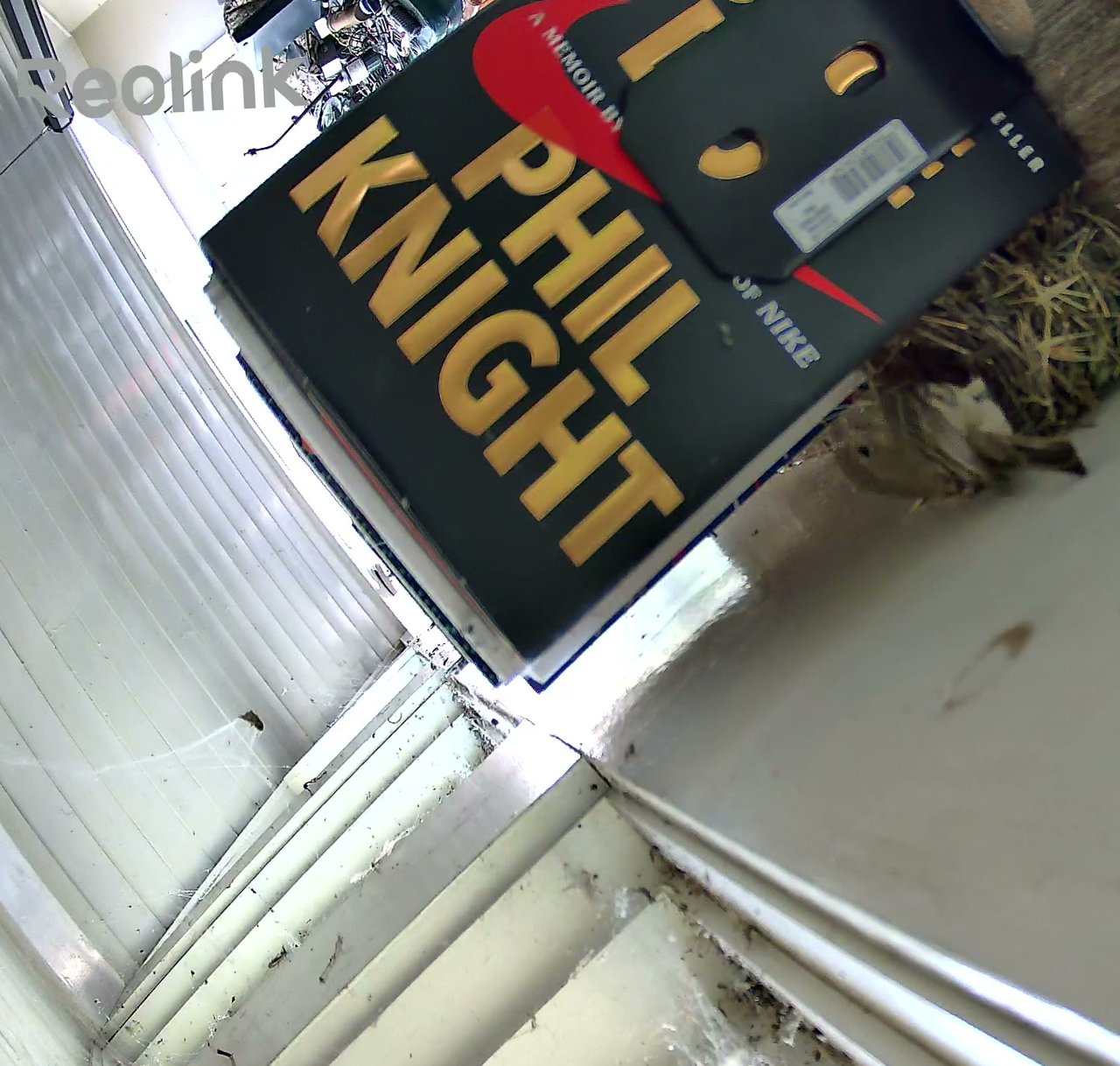
Wednesday is the day the male’s behavior becomes worth noting. Courtship feeding in House Finches is well documented: the male brings food, the incubating female solicits and receives, he departs. That pattern holds in the 10:33 and 12:43–12:44 clips — male arrives, female present or returning, male steps to the rim or the shelf below.
But the 16:35 clip shows something worth recording carefully. The male is settled in the cup, and when he lifts off, four pale, speckled eggs are visible — the highest count the camera has confirmed across all three days. The sunroom camera angle clips the far side of the cup, so lower counts in other frames (two eggs at 13:38, three at 17:35) reflect geometry, not biology. Four eggs, photographically confirmed.
The male returns at 18:33 and at 19:43, settling in the cup both times. By 19:44 the female is back on the nest and for a brief window the pair occupies the same space: her in the cup, him at the rim, interacting. By 20:02 she is alone and incubating for the night.
April 30 — The Architecture Holds
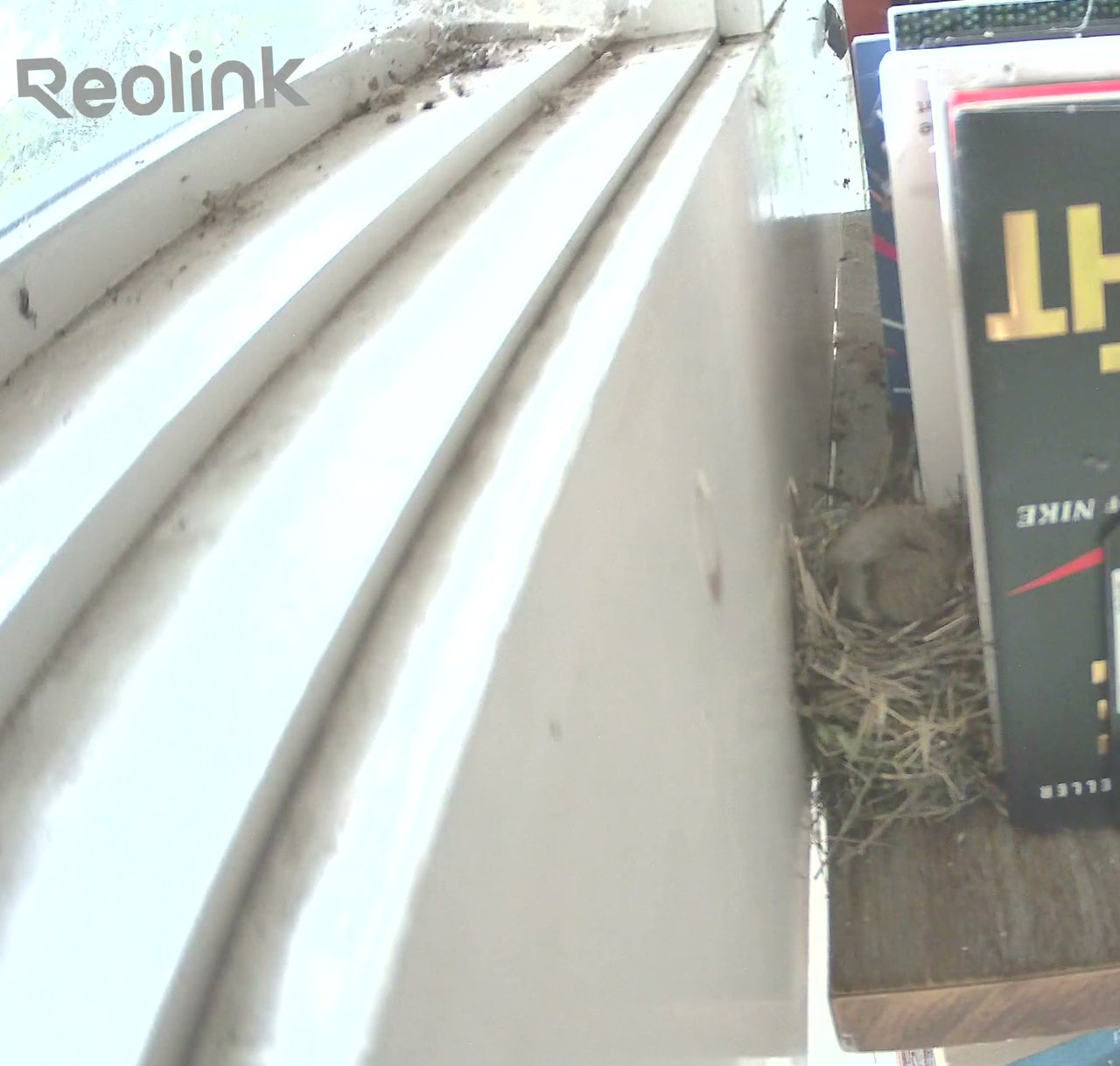
Thursday shows the same structure. The male arrives at 15:09 and 15:10 — two triggers thirteen seconds apart, likely one approach. At 15:53 the female is settled in the cup with one egg visible to her left; the male is perched on the shelf directly below, upright and watching — a posture consistent with a male attending an incubating mate.
At 17:09 the male is in the cup. At 18:21 he is at the rim while she incubates. At 19:18 he is on the adjacent shelf. The rhythm across the afternoon is nearly hourly: approach, brief contact or cup visit, departure, her return.
Just past midnight, a clip at 00:19 shows the male settled in the cup with eggs partially visible beneath him, their NIR-albedo bright against the woven grass of the nest floor — a moment of stillness before the log resumes at dawn.
What Three Days Reveal
The female’s fidelity to the cup is the backbone of this record. The male’s presence is the thing that will require continued watching — not because it is alarming, but because the frequency and duration of his cup visits edge beyond what courtship feeding alone explains. Whether this reflects a pair-bond behavior, a response to some disturbance outside camera range, or individual variation in a more flexible species than the literature suggests: the next several days will tell.
The eggs are in the cup. The birds are attending. Both cameras are running.