Field dispatch
From Five Pale Eggs to First Chicks: Three Days' Watch
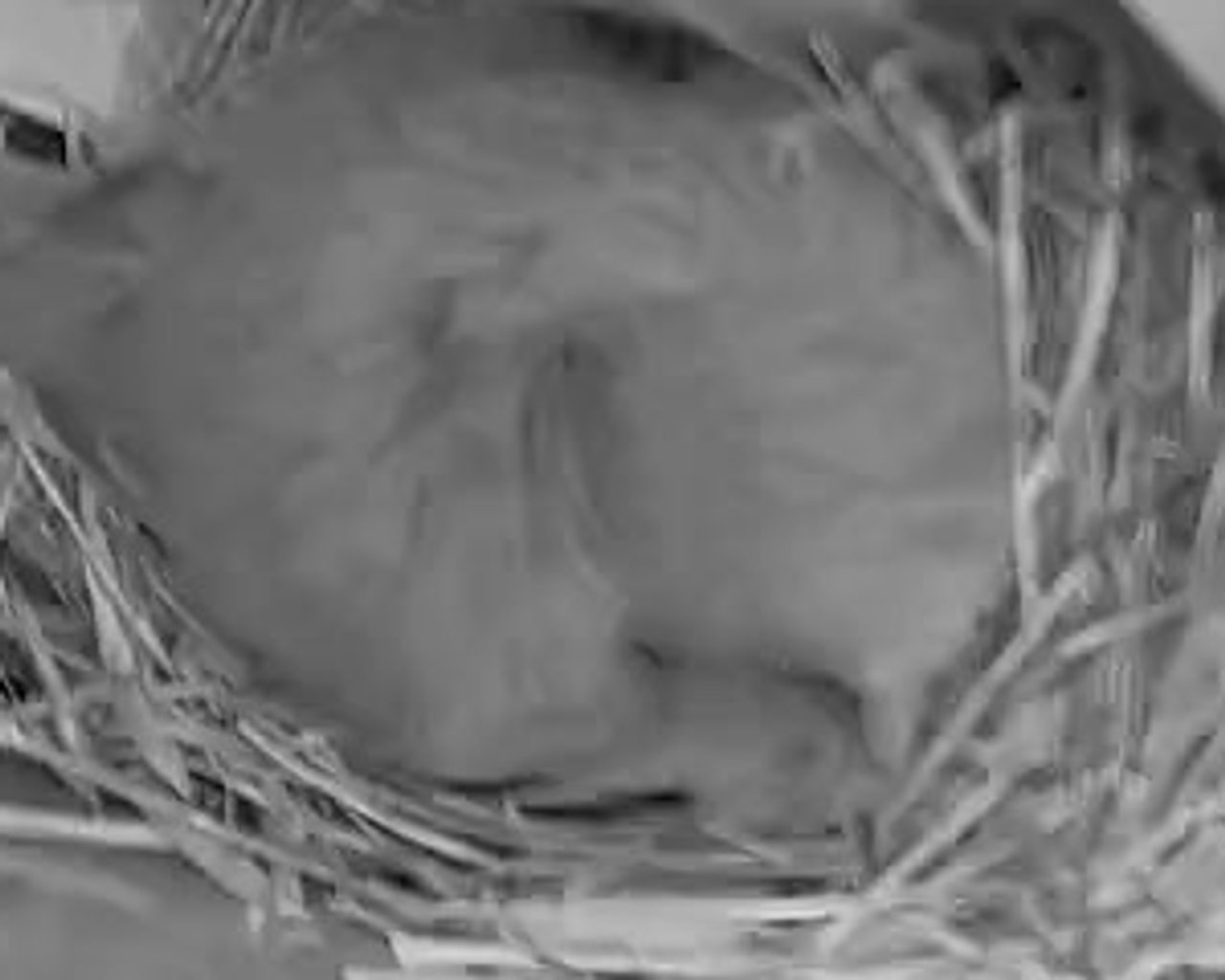
Monday the fourth arrives with the clutch already deep into incubation—Day 8 by my reckoning—and the female has not wavered. She rode out the night tucked tight in the cup, shifting only slightly between IR frames, and by 06:17 we had our cleanest daytime confirmation yet: the nest stood briefly empty and five eggs lay exposed in the sunroom light. Their NIR-albedo reads uniformly high across the cup, pale speckled surfaces reflecting cleanly against the woven fiber walls.
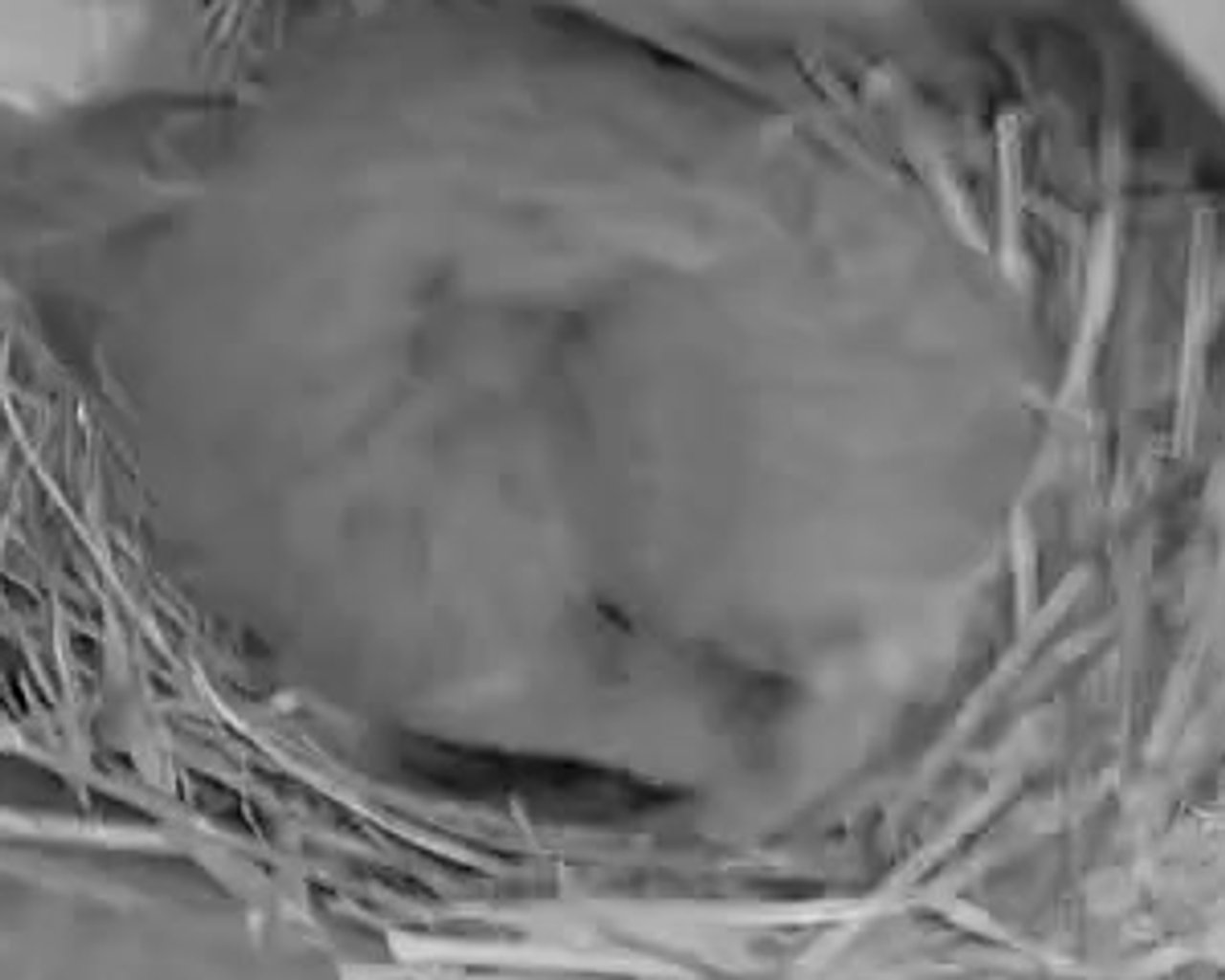
The male was in motion all day Monday. Courtship-feeding visits logged at 07:30, 08:54, 09:40, 11:34, 12:38, 13:13, 15:57, and 17:15—roughly one arrival every ninety minutes through daylight. At 13:59 he perched on the rim with three eggs visible in the cup below him; by 15:54, after the female had risen for a recess, four eggs were clear. House Finch males do not incubate, but his attentiveness was unmistakable: brief contact at the rim, food transferred, then away. Only once—between 18:33 and 18:38—did anything interrupt the pattern, when a human moved through the sunroom and the cup stood conspicuously empty of birds. She was back by 18:58 and settled continuously from 19:52 onward.
Tuesday the fifth ran the same broad shape through its first hours. Overnight incubation unbroken across both cameras, a two-minute gap at 04:48 with eggs visible, then another recess at 06:52 when all five were confirmed in the empty cup—the cleanest count in days. The male’s courtship-feeding visits resumed; at least eight arrivals recorded through daylight hours. At 14:01 he was on the rim interacting with the female in the cup; a few minutes later at 14:05, she shifted briefly and four eggs were visible.
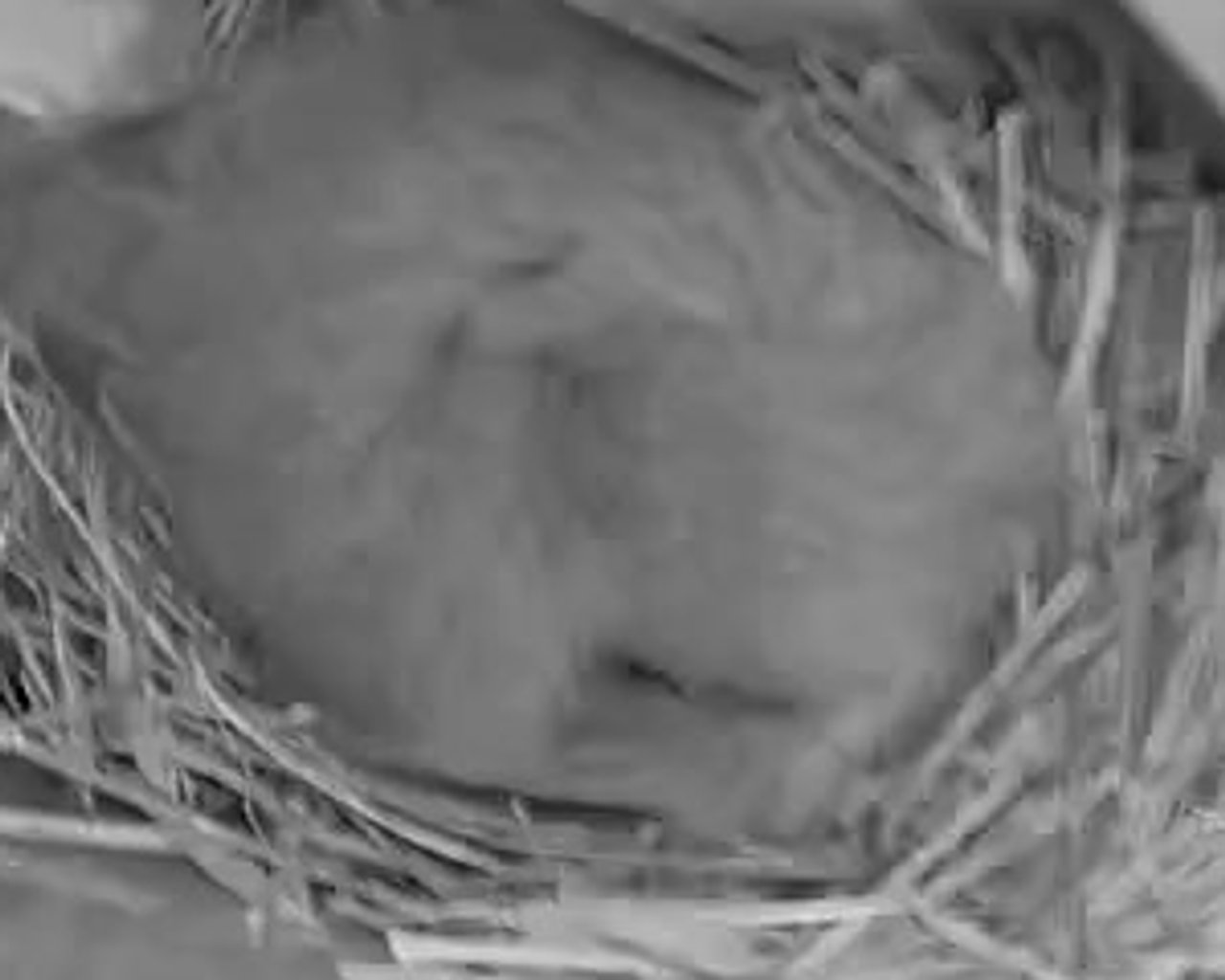
Then at 14:41 Tuesday afternoon the Tapo close camera caught something new: the female stood slightly and revealed one pale egg—and beside it, unmistakably, a small pinkish shape. A chick. Ten minutes later at 14:51, the same camera showed the female at the cup edge while the cup itself held multiple chicks and three eggs simultaneously. The shells had not all gone at once; this was a rolling hatch, which is typical. The NIR-albedo of the chick surfaces in those monochrome frames reads distinctly darker and more matte than the high-albedo eggs alongside them—wet featherless skin against dry speckled shell.
Wednesday the sixth opened with five solid eggs still visible in the 13:36 Tapo clip; the bird stepped off momentarily and the cup was unambiguous. The hatch had not swept through all five overnight. But the afternoon moved fast. At 14:56, the female stood and a small pink chick was visible in the cup. By 15:22, two downy chicks were visible beneath the brooding female, at least one with an eye open. The male appeared again at 14:10, red plumage clear on both cameras, perching on the shelf while she settled over whatever mix of chicks and remaining eggs now occupied the cup.
What runs across all three days is the rhythm: a female who rarely left for more than a few minutes, a male arriving with food on an almost metronomic schedule, and a clutch that held at five confirmed eggs until the hatch began pulling that number down. The male’s role did not change when the chicks appeared—his posture at the rim on Wednesday at 14:10 had exactly the same attentive quality as every courtship-feeding visit since the first egg was laid. What changed was what occupied the cup beneath the female when she briefly rose.
The transition from incubation to brooding is not a discrete moment here; it is the same tucked profile in IR, the same long overnight vigil, the same metronomic male visits. Only the gap between the female’s belly and the cup contents tells the difference—and on these three days, we watched that gap open once, briefly, to show us first an egg, then an egg beside a chick, then two chicks with open eyes.